
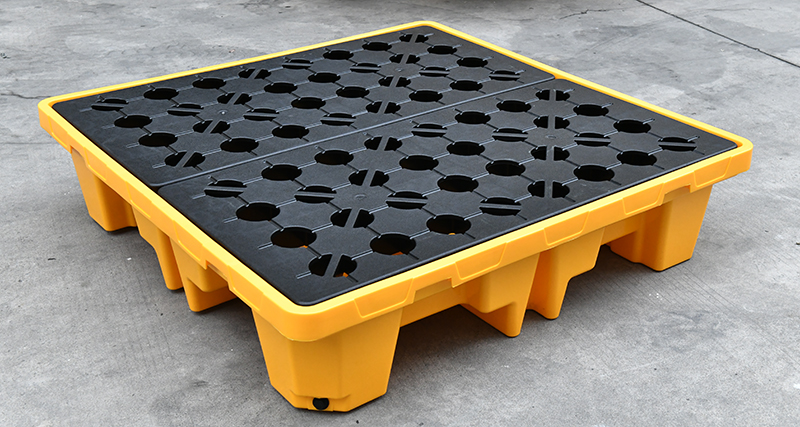
An IBC spill pallet is used below an intermediate bulk container to create secondary containment for stored liquids. Compared with a drum pallet, an IBC pallet normally needs a larger footprint, stronger load support, and a much larger sump. This makes product selection more technical, especially for chemical storage and export projects.
Zhenghao supplies IBC spill containment pallets and related spill containment products for industrial buyers who need a clear size, load, and material recommendation before ordering.
Confirm the IBC Size and Liquid Type
Most buyers start with the container volume, but the liquid type is just as important. Oil, cleaning liquid, acid, alkali, and other chemicals may require different handling practices. Before choosing an IBC spill pallet, confirm the IBC footprint, filled weight, storage temperature, indoor or outdoor use, and any local containment rule that applies to the site.
The pallet should support the container safely and provide enough containment capacity for the project requirement. If you are buying for a regulated facility, confirm the exact sump requirement with your internal EHS team or local authority before final model selection.
Check Sump Capacity
The sump is the contained space below the grating. Its job is to hold leaked liquid so it does not reach the floor, drain, soil, or nearby equipment. For IBC storage, the sump volume is often the most important specification because the container is much larger than a drum.
Ask for the sump capacity in liters, not only the outside dimensions. A pallet may look large in photos but still have a lower sump if the structure is shallow. For high-risk liquid storage, also ask whether the sump is easy to inspect after long-term use.
Review Load Rating and Forklift Access
IBC containers are heavy when filled, so the pallet must be designed for the expected load. Check static load, recommended handling method, and whether the pallet can be moved by forklift. Fork pockets should match the buyer’s equipment and storage layout.
In many facilities, it is safer to place the pallet first and then position the IBC. Moving a loaded IBC spill pallet should only be done according to site safety procedures and the product’s rated use. If the storage area changes often, tell the supplier in advance so they can recommend the correct structure.
Look at Grating and Drain Details
Removable grating makes cleaning and inspection easier. It also keeps the IBC above any liquid that enters the sump. For some projects, a drain plug is useful because it helps empty the sump after inspection or cleaning. For other projects, a sealed sump without a drain may be preferred to reduce leakage points.
Ask how the grating is removed, how many workers are needed, and whether replacement parts are available. These details matter when the pallet will be used for several years in a chemical storage area.
Material and Color
Plastic IBC spill pallets are commonly made from polyethylene because it is corrosion-resistant and easy to clean. Yellow is common in many safety areas because it is highly visible, but custom colors may be useful for site zoning, liquid type identification, or brand requirements.
If the pallet will be exposed to sunlight, outdoor temperature changes, or aggressive liquid, discuss the use environment before confirming the order. Material selection should match the liquid, load, and expected service life.
What to Send Before Asking for a Quote
To get a useful quote, prepare the IBC size, filled weight, liquid type, target sump capacity, storage environment, forklift direction, and quantity. If you also need drum pallets or trays for the same project, include those details so the supplier can recommend a consistent containment system.
For product comparison, review Zhenghao’s 4-drum IBC spill containment pallet and contact us with your required dimensions and application. A clear request at the beginning saves time and helps avoid unsuitable models.